APRIL 2026 · 8 MIN · CRUISING · BISCAYNE BAY
Why Nixon Beach is for the phones, not the principals
Nixon Beach — the sandbar off Key Biscayne — is the most photographed water in Miami. That is precisely why it is not the answer for a principal who has arrived to disappear.
On any Saturday in season, a thousand phones are angled at the hulls around it. A vessel at Nixon is not anchored. It is publishing. There is a version of Miami in which that is the brief. For most Elegasea principals, it is not.
The Biscayne Bay that matters to a discreet principal lies south of Nixon, inside the national park, along a string of anchorages that most Miami residents have never named. Each one trades a small logistical cost for a large privacy return.
Anchorage 1 — Soldier Key
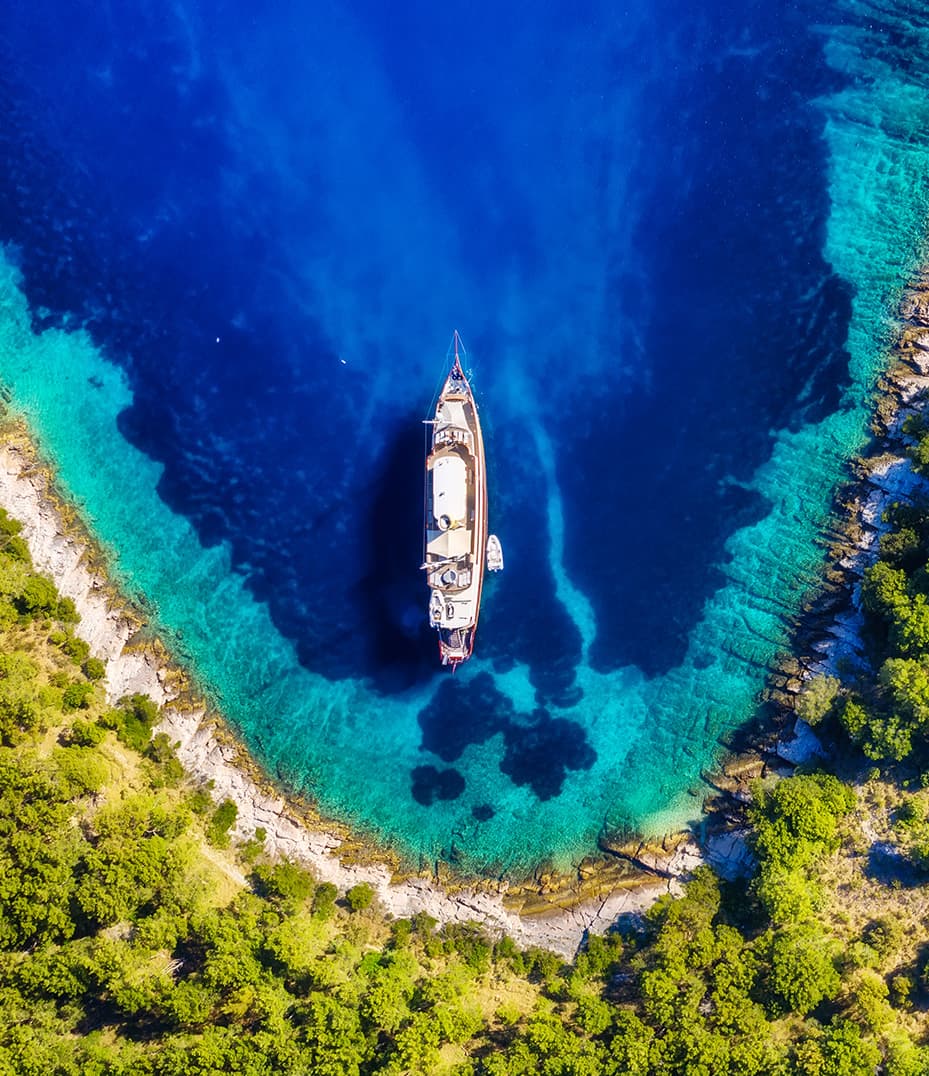
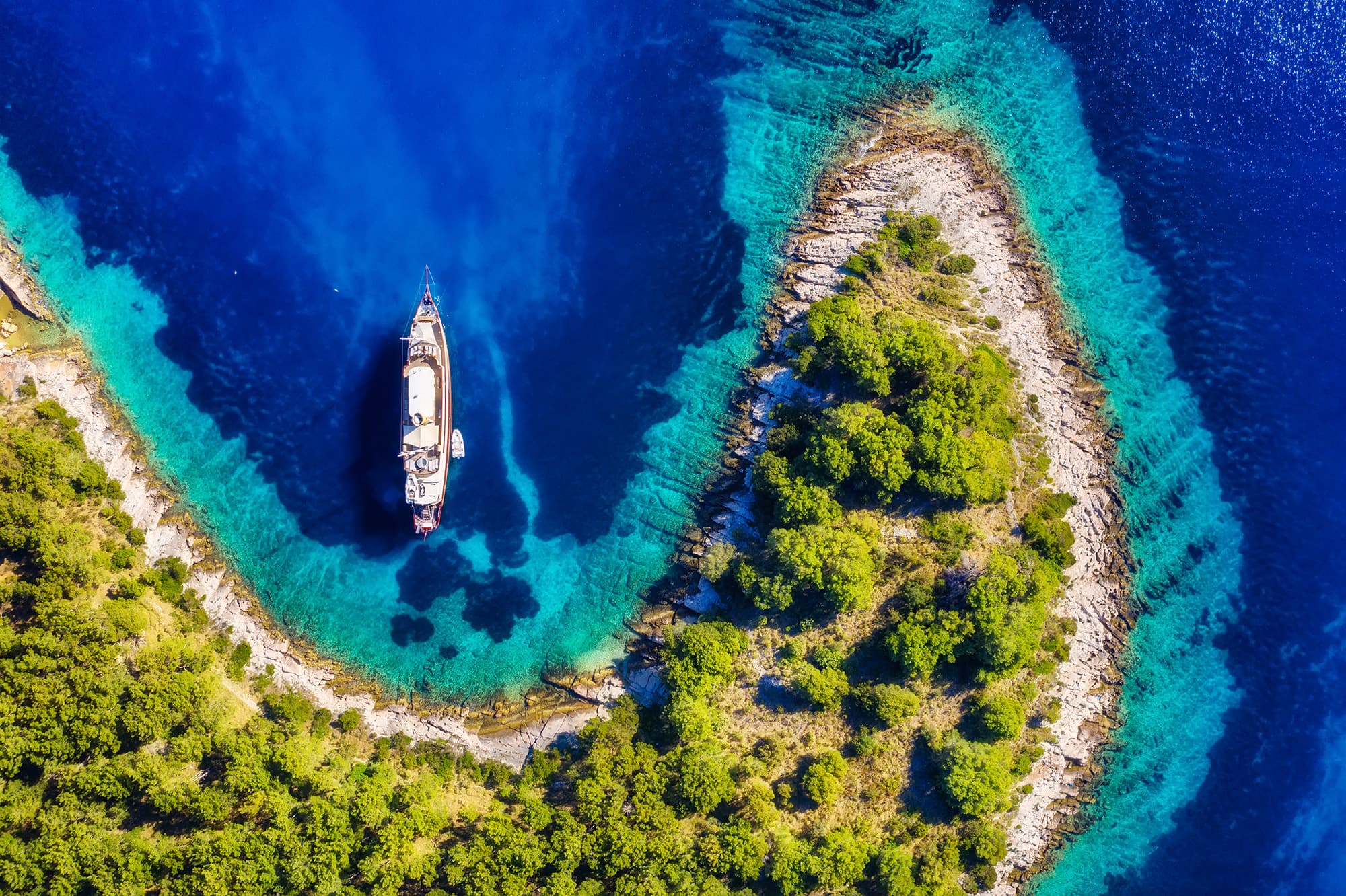
Soldier Key is the first island south of the Cape Florida line. It is small, unpopulated, and sits in water clear enough on a clean wind day to read the anchor on the bottom from the deck.
The practical attraction of Soldier Key is that it is close. A principal can leave a Sea Isle or Island Gardens slip at eleven, be anchored by noon, and be back on the dock for an eight o'clock dinner in the city. The leeward side holds in the prevailing east wind. A tender off the stern gets you to the flats in minutes.
What Soldier Key is not: a party anchorage. If the brief is a quiet lunch with two or three guests and a principal who wants to read something on deck, it is close to ideal.
Anchorage 2 — Stiltsville's leeward edge
Stiltsville — the surviving cluster of stilt houses on the flats east of Biscayne Bay — is the most photographed non-beach in Miami. The houses themselves are protected and largely inaccessible. The anchorage is the point.
On a settled south-southeast wind, the leeward edge of the Stiltsville flat holds a shallow-draft yacht or tender group in sand water the color of a pale bottle. It is visually dramatic. It is also easily vacated — a captain who does not like the way the wind is clocking can be in Government Cut in under forty minutes.
This is the anchorage for a principal who wants the photograph without the audience. At Nixon, the audience is the point. At Stiltsville, the audience is the horizon.
Anchorage 3 — Elliott Key (Coon Point)
Elliott Key is the longest island inside Biscayne National Park. The Coon Point cut — on the bay side of the north end — is the anchorage most Miami captains quietly prefer for an overnight.
The holding is mangrove-fringed mud, which is unglamorous and excellent. The island itself is unlit at night. A tender off the stern will reach the park dock in ten minutes for a sunset walk on the cleared trail. A principal who wants the sensation of having left Miami, without leaving it, gets that here.
The trade is that the cell signal is inconsistent. For many principals, that is not a trade. That is the feature.
Anchorage 4 — Boca Chita Key
Boca Chita is the park's most recognizable island — the one with the ornamental lighthouse. The small harbor inside accepts vessels up to roughly 65 feet, which puts most principal yachts outside it. The anchorage of interest is outside the harbor on the leeward flat.
It is a day anchorage, not an overnight. The appeal is ceremony. A principal who wants to put foot on an island during a Miami visit — to walk, to take a single photograph, to stand at the base of the lighthouse for ten minutes — can do all of that and be back underway in an hour.
The park imposes its own quiet on Boca Chita. That quiet is worth the transit time.
Anchorage 5 — The Ragged Keys cut
The Ragged Keys are the small chain immediately north of Boca Chita. A narrow cut on the bay side, between two of the smaller keys, offers a discreet anchorage that does not appear on any standard cruising guide as an anchorage at all.
The reason it is usable is specific. A vessel with twelve to fifteen feet of draft can lie calmly there in a wind that would make Nixon uncomfortable, without a single other hull in sight for most of the day.
A captain familiar with the cut will approach it from the north, never the south. A captain unfamiliar with the cut should not approach it at all. This is, in the truest sense, a local anchorage. Which is why it belongs in this list and why we have not drawn a waypoint on it.
Coordination, tender discipline, and quiet arrival
Every anchorage on this list fails if the tender protocol is wrong. A principal yacht at Soldier Key that runs three tenders, loud, in a staggered pattern, has drawn the audience the principal came to avoid. The same anchorage, with a single tender, one crossing, and a disciplined return, remains invisible.
Our coordination on a Biscayne day is unglamorous. We confirm wind and tide the night before. We brief the captain on the principal's intent — rest, entertain, photograph, disappear — and select the anchorage against that brief, not against the brochure. We time the tender to the cleanest hour of light. We leave before the sandbar crowd forms, not after.
Quiet is the strategy. The anchorages are the mechanism.
The bay is public. The chart is not.